Difference between revisions of "File:Logi2s4t.jpg"
(misprint in the number of figure and the number of page) |
(misprint in the number of figure and the number of page) |
||
| Line 17: | Line 17: | ||
</ref>. |
</ref>. |
||
| − | This map is used as Fig.7. |
+ | This map is used as Fig.7.11 |
| − | at page |
+ | at page 83 of book |
«[[Superfunctions]]»<ref> |
«[[Superfunctions]]»<ref> |
||
https://www.amazon.co.jp/Superfunctions-Non-integer-holomorphic-functions-superfunctions/dp/6202672862 Dmitrii Kouznetsov. [[Superfunctions]]: Non-integer iterates of holomorphic functions. [[Tetration]] and other [[superfunction]]s. Formulas,algorithms,tables,graphics - 2020/7/28 |
https://www.amazon.co.jp/Superfunctions-Non-integer-holomorphic-functions-superfunctions/dp/6202672862 Dmitrii Kouznetsov. [[Superfunctions]]: Non-integer iterates of holomorphic functions. [[Tetration]] and other [[superfunction]]s. Formulas,algorithms,tables,graphics - 2020/7/28 |
||


Latest revision as of 20:56, 21 August 2025
Complex map of half iterate of the logistic operator with parameter \(s\!=\!4\),
\[ T(z)\!=\! s \,z \, (1\!-\!z) \]
\[ u\!+\!\mathrm i v= T^{1/2} (x\!+\!\mathrm i y) \]
The map is plotted after the request by Elutin Pavel Vyacheslavovich [1].
This map is used as Fig.7.11
at page 83 of book
«Superfunctions»[2][3]
in order to show that the Holomorphic extension of the logistic sequence
[4]
is not so chaotic.
In the code below, the iterate half is implemented as follows:
\[ T^{1/2}(z)=F(0.5+E(z)) \]
Here \(F\) is the Superfunction and \(E=F^{-1}\) is the Abelfunction
C++ generator of map
ado.cin, conto.cin, efjh.cin should be loaded in order to compile the code below
#include <math.h>
#include <stdio.h>
#include <stdlib.h>
#define DB double
#define DO(x,y) for(x=0;x<y;x++)
//using namespace std;
#include <complex>
typedef std:: complex<double> z_type;
#define Re(x) x.real()
#define Im(x) x.imag()
#define I z_type(0.,1.)
#include "conto.cin"
#include "efjh.cin"
/*
z_type arccos(z_type z){ return -I*log(z+I*sqrt(1.-z*z)); }
z_type coe(z_type z){ return .5*(1.-cos(exp((z+1.)/LQ))); }
z_type boe(z_type z){ return LQ*log(arccos(1.-2.*z))-1.; }
z_type doe(z_type z){ return coe(1.+boe(z));; }
*/
int main(){ int j,k,m,n; DB x,y, p,q, t; z_type z,c,d;
  int M=201,M1=M+1;
  int N=401,N1=N+1;
DB X[M1],Y[N1], g[M1*N1],f[M1*N1], w[M1*N1]; // w is working array.
char v[M1*N1]; // v is working array
FILE *o;o=fopen("Logi2s4.eps","w");ado(o,604,604);
fprintf(o,"302 302 translate\n 100 100 scale\n");
DO(m,M1) X[m]=-3.+.03*(m-.5);
DO(n,N1) Y[n]=-3.+.015*(n-.5);

for(m=-3;m<4;m++){if(m==0){M(m,-3.04)L(m,3.04)} else{M(m,-3)L(m,3)}}
for(n=-3;n<4;n++){         M(  -3  ,n)L(3,n)}
fprintf(o,"2 setlinecap .008 W 0 0 0 RGB S\n");

maq(4.);
DO(m,M1)DO(n,N1){g[m*N1+n]=9999; f[m*N1+n]=9999;}
DO(m,M1){x=X[m]; //printf("%5.2f\n",x);
DO(n,N1){y=Y[n]; z=z_type(x,y);
//      c=E(H(z))-1.;
//      c=F(1.+E(0.1*z));
//      c=F(z);
        c=F(.5+E(z));
//      c=boe(z);
//      c=.5*(1.-cos(exp((z+1.)/LQ)));
//      d=H(F(z-1.));
//      p=abs(c-d)/(abs(c)+abs(d));  p=-log(p)/log(10.)-1.;
//      if(p>-4.9 && p<20) g[m*N1+n]=p;
        p=Re(c);q=Im(c);
        if(p>-4.9 && p<4.9)     {g[m*N1+n]=p;}
//      if(q>-4.9 && q<4.9)     {f[m*N1+n]=q;}
        if(q>-4.9 && q<4.9 && fabs(q)>1.e-11 )  {f[m*N1+n]=q;}
                        }}

fprintf(o,"1 setlinejoin 2 setlinecap\n");
//p=.8;q=.4;
p=2.;q=.5;
//#include"plof.cin"
for(m=-2;m<2;m++)
for(n=1;n<10;n+=1)conto(o,f,w,v,X,Y,M,N, (m+.1*n),-q, q);fprintf(o,".005 W 0 .6 0 RGB S\n");
for(m=0;m<2;m++)
for(n=1;n<10;n+=1)conto(o,g,w,v,X,Y,M,N,-(m+.1*n),-q, q);fprintf(o,".005 W .9 0 0 RGB S\n");
for(m=0;m<2;m++)
for(n=1;n<10;n+=1)conto(o,g,w,v,X,Y,M,N, (m+.1*n),-q, q);fprintf(o,".005 W 0 0 .9 RGB S\n");

for(m= 1;m<5;m++) conto(o,f,w,v,X,Y,M,N, (0.-m),-p,p);   fprintf(o,".02 W .9 0 0 RGB S\n");
for(m= 1;m<5;m++) conto(o,f,w,v,X,Y,M,N, (0.+m),-p,p);   fprintf(o,".02 W 0 0 .9 RGB S\n");
for(m=-4;m<5;m++) conto(o,g,w,v,X,Y,M,N, (0.+m),-p,p);   fprintf(o,".02 W 0 0 0 RGB S\n");

                  conto(o,f,w,v,X,Y,M,N, (0.  ),-p,p);   fprintf(o,".02 W .6 0 .6 RGB S\n");

fprintf(o,"0 setlinecap 0 setlinejoin 0 setlinecap\n");

//M(-3.02,0)L(0,0)
//M(1.-1./Q,0)L(3,0)  fprintf(o,"0.03 W 1 1 1 RGB S\n");
M(1,0)L(3,0)  fprintf(o,"0.03 W 1 1 1 RGB S\n");
//for(n=0;n<16;n++) {M(-.2*n,0)L(-.2*(n+.4),0)}
for(n=0;n<10;n++) {     M(1+.2*(n+.4),0)
                        L(1+.2*(n+.8),0)}
fprintf(o,"0.04 W 0 0 0 RGB S\n");


fprintf(o,"showpage\n%c%cTrailer",'%','%'); fclose(o);
        system("epstopdf Logi2s4.eps"); // for linux
        system(    "xpdf Logi2s4.pdf"); // for Linux
//        system(    "open logi2s4.pdf"); // for mac
//        getchar(); system("killall Preview");
}
Latex generator of labels
\documentclass[12pt]{article}
\usepackage{geometry}
\usepackage{graphics}
\usepackage{rotating}
\paperwidth 1280pt
\paperheight 1280pt
\textwidth 1300pt
\textheight 1300pt
%\paperwidth 640pt
%\paperheight 640pt
\topmargin -78pt
\oddsidemargin -96pt
\newcommand \sx {\scalebox}
\newcommand \ing \includegraphics
\newcommand \rot {\begin{rotate}}
\newcommand \ero {\end{rotate}}
\begin{document}

\newcommand \axesS {
\normalsize
\put( 18,624){\sx{2.6}{$y$}}
\put( 18,530){\sx{2.6}{$2$}}
\put( 18,430){\sx{2.6}{$1$}}
\put( 18,330){\sx{2.6}{$0$}}
\put( -2,230){\sx{2.6}{$-1$}}
\put( -2,130){\sx{2.6}{$-2$}}
\put( -2, 30){\sx{2.6}{$-3$}}
\put( 16, 10){\sx{2.6}{$-3$}}
\put(116, 10){\sx{2.6}{$-2$}}
\put(216, 10){\sx{2.6}{$-1$}}
\put(332, 10){\sx{2.6}{$0$}}
\put(432, 10){\sx{2.6}{$1$}}
\put(532, 10){\sx{2.6}{$2$}}
\put(622, 10){\sx{2.6}{$x$}}
}
\sx{2}{\begin{picture}(640,628)
%\put( 4, 4){\ing{logi2b3}}
\put(36, 36){\ing{Logi2s4.pdf}}
\normalsize
\put( 62, 424){\rot{ 7}\sx{4}{$v\!=\!4$}\ero}
\put( 62, 326){\rot{ 0}\sx{4}{$v\!=\!0$}\ero}
\put( 42, 232){\rot{-9}\sx{4}{$v\!=\!-4$}\ero}
%
\put( 140, 42){\rot{71}\sx{4}{$u\!=\!-4$}\ero}
\put( 242, 44){\rot{66}\sx{4}{$u\!=\!0$}\ero}
\put( 294, 40){\rot{59}\sx{4}{$u\!=\!2$}\ero}
%
\put( 464, 512){\rot{ 48}\sx{4}{$v\!=\!2$}\ero}
\put( 504, 464){\rot{ 52}\sx{4}{$v\!=\!0$}\ero}
\put( 565, 444){\rot{ 57}\sx{4}{$v\!=\!-2$}\ero}
\axesS
\end{picture}}
\end{document}
References
- ↑ 2009.10.09. Елютин П. В. Думаю, задача, понятая как “КОНТИНУАЛЬНОЕ ОБОБЩЕНИЕ ЛОГИСТИЧЕСКОГО ОТОБРАЖЕНИЯ”, будет стоить Ваших усилий и времени, если удастся выявить модель, порождением которой является закон движения X(t) - или определить континуальные характеристики X(t) (например, границы значений производных по времени). Private communication, Oct 9, 2009 5:32 PM JST.
- ↑ https://www.amazon.co.jp/Superfunctions-Non-integer-holomorphic-functions-superfunctions/dp/6202672862 Dmitrii Kouznetsov. Superfunctions: Non-integer iterates of holomorphic functions. Tetration and other superfunctions. Formulas,algorithms,tables,graphics - 2020/7/28
- ↑ https://mizugadro.mydns.jp/BOOK/468.pdf Dmitrii Kouznetsov (2020). Superfunctions: Non-integer iterates of holomorphic functions. Tetration and other superfunctions. Formulas, algorithms, tables, graphics. Publisher: Lambert Academic Publishing.
- ↑
https://link.springer.com/article/10.3103/S0027134910020049
http://mizugadro.mydns.jp/PAPERS/2010logistie.pdf D.Kouznetsov. Holomorphic extension of the logistic sequence. Moscow University Physics Bulletin, 2010, No.2, p.91-98. (Russian version: p.24-31)
File history
Click on a date/time to view the file as it appeared at that time.
| Date/Time | Thumbnail | Dimensions | User | Comment | |
|---|---|---|---|---|---|
| current | 18:43, 21 August 2025 |  | 1,275 × 1,275 (631 KB) | T (talk | contribs) | misprint, extra "dash" at the real axis |
| 06:13, 1 December 2018 | 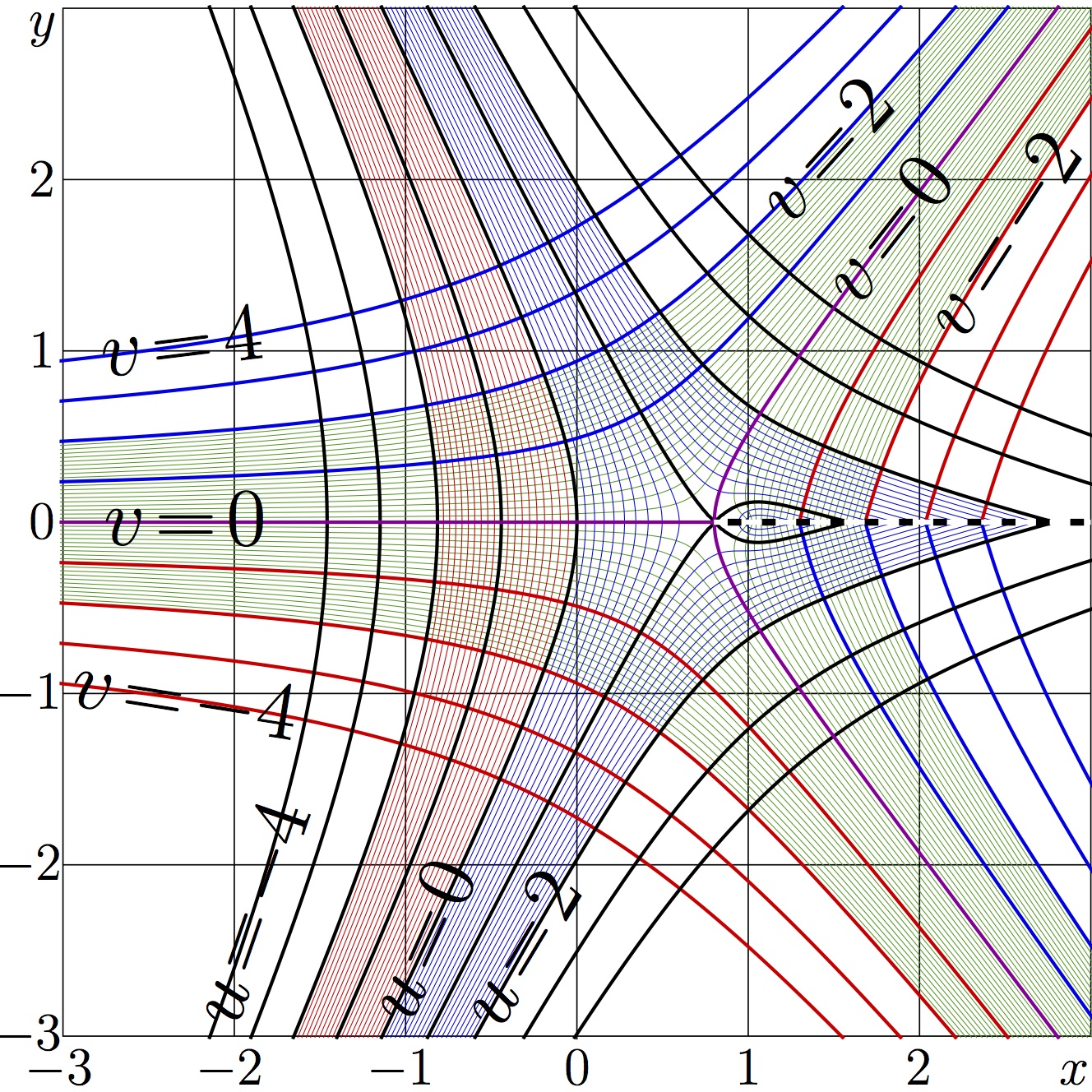 | 1,328 × 1,328 (906 KB) | Maintenance script (talk | contribs) | Importing image file |
You cannot overwrite this file.
File usage
There are no pages that use this file.
