Difference between revisions of "File:Penplot.jpg"
($ -> \( ; description ; refs ; pre ; keywords) |
|||
| Line 1: | Line 1: | ||
| + | {{oq|Penplot.jpg|Original file (1,266 × 2,100 pixels, file size: 240 KB, MIME type: image/jpeg)|480}} |
||
| ⚫ | |||
| + | Fig.19.4 from page 280 of book «[[Superfunctions]]»<ref name="be"> |
||
| ⚫ | |||
| ⚫ | |||
| + | D.Kouznetsov. [[Superfunctions]]. [[Lambert Academic Publishing]], 2020. |
||
| + | </ref>, 2020. |
||
| + | This picture is used also as Рис.19.4 at page 266 of the Russian version «[[Суперфункции]]»<ref name name="br"> |
||
| − | ==Other lines== |
||
| ⚫ | |||
| ⚫ | |||
| ⚫ | |||
| + | </ref>, 2014. |
||
| + | |||
| ⚫ | |||
| + | |||
| ⚫ | |||
| + | |||
| ⚫ | |||
| + | it is is smallest real [[fixed point]] of [[natural tetration]]. |
||
The thin blue line shows the asymptotic |
The thin blue line shows the asymptotic |
||
| − | + | \( y=L+\exp(k(x+x_1)) \) |
|
| − | where |
+ | where \( k\approx 1.86573322821 \) |
| − | and |
+ | and \(x_1 \approx 2.24817451898 \) |
| − | The thin green line shown the deviation from the linear approximation |
+ | The thin green line shown the deviation of the natural [[pentation]] from the linear approximation |
| − | + | \( \mathrm{linear}(x)=1+x \) |
|
| − | The deviation is |
+ | The deviation is defined as \(~ \delta=\delta(x)=\mathrm{pen}(x)-\mathrm{linear}(x) \) |
| − | In the range |
+ | In the range \(-2.1\!<\!x\!<\!1.1\), the deviation is small, the linear approximation provides 2 correct significant digits. In order to make the deviation visible, it is scaled with factor 10, so, \(y=10\delta(x)\) is plotted. |
==Description of natural pentation== |
==Description of natural pentation== |
||
| − | Natiral [[pentation]] is specific superfunction of [[natural tetration]] (implementation [[fsexp.cin]] is available); |
+ | Natiral [[pentation]] is specific superfunction of [[natural tetration]] (implementation [[fsexp.cin]] is available); the natural [[pentation]] safisfies the [[transfer equation]] |
| − | pentation safisfies the [[transfer equation]] |
||
| − | + | \(\mathrm{pen}(z\!+\!1) = \mathrm{tet}\Big( \mathrm{pen}(z)\Big)\) |
|
| − | The additional condition |
+ | The additional condition \( \mathrm{pen}(1)=\mathrm e \approx 2.71\) is assumed. |
| + | The regular behaviour at \( \pm \mathrm i \infty \) is assumed as an additional requirement; it |
||
| ⚫ | |||
| + | is expected to provide the ubnigueness of the natural [[pentation]]. |
||
| ⚫ | |||
| + | |||
| + | |||
| + | The construction and evaluation of [[natural tetration]] is described also at [[Mathematics of Computation]] |
||
| + | <ref> |
||
| ⚫ | |||
| ⚫ | |||
| + | </ref>, 2009. |
||
| + | |||
| + | The construction and evaluation of natural [[pentation]] is described also at [[Applied and Computational Mathematics]] |
||
| + | <ref> |
||
| ⚫ | |||
| ⚫ | |||
| + | [[Applied and Computational Mathematics]], 2014; 3(6), p.307-314. |
||
| + | </ref>, 2014. |
||
==[[C++]] generator of curves== |
==[[C++]] generator of curves== |
||
| − | Files [[ado.cin]], [[fsexp.cin]], [[fslog.cin]] should be loaded in order to compile the [[C++]] code below |
+ | \* Files [[ado.cin]], [[fsexp.cin]], [[fslog.cin]] should be loaded in order to compile the [[C++]] code below |
| + | <pre> |
||
| − | <poem><nomathjax><nowiki> |
||
#include <math.h> |
#include <math.h> |
||
#include <stdio.h> |
#include <stdio.h> |
||
| Line 120: | Line 147: | ||
system( "open penplo.pdf"); |
system( "open penplo.pdf"); |
||
} |
} |
||
| + | </pre> |
||
| − | </nowiki></nomathjax></poem> |
||
| − | |||
==[[Latex]] generator of labels== |
==[[Latex]] generator of labels== |
||
| + | <pre> |
||
| − | |||
| − | <poem><nomathjax><nowiki> |
||
\documentclass[12pt]{article} |
\documentclass[12pt]{article} |
||
\paperwidth 608px |
\paperwidth 608px |
||
| Line 172: | Line 197: | ||
\end{picture} |
\end{picture} |
||
\end{document} |
\end{document} |
||
| + | </pre> |
||
| − | </nowiki></nomathjax></poem> |
||
| − | |||
==References== |
==References== |
||
| + | {{ref}} |
||
| + | {{fer}} |
||
| ⚫ | |||
| − | http://www.ils.uec.ac.jp/~dima/PAPERS/2009analuxpRepri.pdf <br> |
||
| ⚫ | |||
| + | ==Keywords== |
||
| − | https://www.morebooks.de/store/ru/book/Суперфункции/isbn/978-3-659-56202-0 <br> |
||
| − | http://www.ils.uec.ac.jp/~dima/BOOK/202.pdf <br> |
||
| ⚫ | |||
| ⚫ | |||
| + | «[[Ackermann]]», |
||
| ⚫ | |||
| + | «[[Explicit plot]]», |
||
| ⚫ | |||
| + | «[[Natural pentation]]», |
||
| ⚫ | |||
| + | «[[Pentation]]», |
||
| + | «[[Superfunction]]», |
||
| + | «[[Superfunctions]]», |
||
| + | «[[Tetration]]», |
||
| + | «[[AMS]]», |
||
| + | |||
| + | «[[Суперфункции]]», |
||
[[Category:Ackermann]] |
[[Category:Ackermann]] |
||
| Line 196: | Line 223: | ||
[[Category:Pentation]] |
[[Category:Pentation]] |
||
[[Category:Superfunction]] |
[[Category:Superfunction]] |
||
| + | [[Category:Superfunctions]] |
||
[[Category:Tetriation]] |
[[Category:Tetriation]] |
||
[[Category:AMS]] |
[[Category:AMS]] |
||


Revision as of 21:54, 3 January 2026
Fig.19.4 from page 280 of book «Superfunctions»[1], 2020.
This picture is used also as Рис.19.4 at page 266 of the Russian version «Суперфункции»[2], 2014.
The picture represents the explicit plot of natural pentation.
\(y=\mathrm{pen}(x)\) is shown with thick black line.
The thin red line shows it asymptotic level \(L\approx -1.8503545290271812\) ; it is is smallest real fixed point of natural tetration.
The thin blue line shows the asymptotic
\( y=L+\exp(k(x+x_1)) \)
where \( k\approx 1.86573322821 \)
and \(x_1 \approx 2.24817451898 \)
The thin green line shown the deviation of the natural pentation from the linear approximation
\( \mathrm{linear}(x)=1+x \)
The deviation is defined as \(~ \delta=\delta(x)=\mathrm{pen}(x)-\mathrm{linear}(x) \)
In the range \(-2.1\!<\!x\!<\!1.1\), the deviation is small, the linear approximation provides 2 correct significant digits. In order to make the deviation visible, it is scaled with factor 10, so, \(y=10\delta(x)\) is plotted.
Description of natural pentation
Natiral pentation is specific superfunction of natural tetration (implementation fsexp.cin is available); the natural pentation safisfies the transfer equation
\(\mathrm{pen}(z\!+\!1) = \mathrm{tet}\Big( \mathrm{pen}(z)\Big)\)
The additional condition \( \mathrm{pen}(1)=\mathrm e \approx 2.71\) is assumed.
The regular behaviour at \( \pm \mathrm i \infty \) is assumed as an additional requirement; it is expected to provide the ubnigueness of the natural pentation.
Natural pentation is specific superfunction, it is constructed with regular iteration at the lowest real fixed point of natural tetration, denoted with \(L\).
The construction and evaluation of natural tetration is described also at Mathematics of Computation
[3], 2009.
The construction and evaluation of natural pentation is described also at Applied and Computational Mathematics [4], 2014.
C++ generator of curves
\* Files ado.cin, fsexp.cin, fslog.cin should be loaded in order to compile the C++ code below
 #include <math.h>
 #include <stdio.h>
 #include <stdlib.h>
 #define DB double
 #define DO(x,y) for(x=0;x<y;x++)
#include <complex>
typedef std::complex<double> z_type;
 #define Re(x) x.real()
 #define Im(x) x.imag()
 #define I z_type(0.,1.)
 #include "ado.cin"
 #include "fsexp.cin"
 #include "fslog.cin"

z_type pen0(z_type z){
DB Lp=-1.8503545290271812;
DB k,a,b;
//      k=1.86573322821; a=-.62632418; b=0.4827;
        k=1.86573322821; a=-.6263241; b=0.4827;

z_type e=exp(k*z);
return Lp + e*(1.+e*(a+b*e));
}

z_type pen7(z_type z){ DB x; int m,n; z=pen0(z+(2.24817451898-7.));
DO(n,7) { if(Re(z)>8.) return 999.;  z=FSEXP(z);  if(abs(z)<40) goto L1; return 999.; L1: ;}
return z; }

z_type pen(z_type z){ DB x; int m,n;
x=Re(z); if(x<= -4.) return pen0(z);
m=int(x+5.);
z-=DB(m);
z=pen0(z);
DO(n,m) z=FSEXP(z);
return z;
}

int  main(){ int j,k,m,n; DB x,y, p,q, t; z_type z,c,d, cu,cd;
FILE *o;o=fopen("penplo.eps","w");  ado(o,608,1008);
 fprintf(o,"404 204 translate\n 100 100 scale\n");
#define M(x,y) fprintf(o,"%8.4f %8.4f M\n",0.+x,0.+y);
#define L(x,y) fprintf(o,"%8.4f %8.4f L\n",0.+x,0.+y);
 for(m=-4;m<3;m++) {M(m,-2)L(m,8)}
 for(n=-2;n<11;n++) {M(  -4,n)L(2,n)} fprintf(o,"2 setlinecap 1 setlinejoin .004 W 0 0 0 RGB S\n");

DO(n,150){x=-4+.04*n;y=Re(pen7(x)); if(n==0) M(x,y)else L(x,y); if(y>8.)break;} fprintf(o,".02 W 0 0 0 RGB S\n");

DO(n,150){x=-2.2+.04*n;y=10.*(Re(pen7(x))-(1.+x)); if(n==0) M(x,y)else L(x,y); if(y>.3)break;} fprintf(o,".01 W 0 .5 0 RGB S\n");

DB L=-1.8503545290271812;
DB K=1.86573322821;
DB a=-.6263241;
DB b=0.4827;
DO(n,80){x=-4.+.04*n; DB e=exp(K*(x+2.24817451898));    y=L+e;
        if(n==0) M(x,y) else L(x,y); if(y>8.) break;}
fprintf(o,".01 W 0 0 1 RGB S\n");

/*
DO(n,60){x=-4+.04*n; DB e=exp(K*(x+2.24817451898));     y=L+e*(1.+e*(a));
        if(n==0) M(x,y) else L(x,y); if(y>8.||y<-2.) break;}
*/
M(-4,L)L(0,L)
fprintf(o,".01 W 1 0 0 RGB S\n");


/*
DO(n,60){x=-4+.04*n; DB e=exp(K*(x+2.24817451898));     y=L+e*(1.+e*(a+e*b));
        if(n==0) M(x,y) else L(x,y); if(y<-2.) break;}
fprintf(o,".01 W 1 0 0 RGB S\n");
*/

DB t2=M_PI/1.86573322821;
DB tx=-2.32;
fprintf(o,"showpage\n%c%cTrailer",'%','%'); fclose(o);

printf("pen7(-1)=%18.14f\n", Re(pen7(-1.)));
printf("Pi/1.86573322821=%18.14f  %18.14f\n", M_PI/1.86573322821, 2*M_PI/1.86573322821);

        system("epstopdf penplo.eps");
        system(    "open penplo.pdf");
}
Latex generator of labels
\documentclass[12pt]{article}
\paperwidth 608px
\paperheight 1008px
\textwidth 1394px
\textheight 1300px
\topmargin -104px
\oddsidemargin -90px
\usepackage{graphics}
\usepackage{rotating}
\newcommand \sx {\scalebox}
\newcommand \rot {\begin{rotate}}
\newcommand \ero {\end{rotate}}
\newcommand \ing {\includegraphics}
\newcommand \rmi {\mathrm{i}}
\begin{document}
{\begin{picture}(608,1008)
%\put(12,0){\ing{24}}
%\put(12,0){\ing{penma}}
\put(0,0){\ing{penplo}}
\put(377,994){\sx{3.2}{$y$}}
\put(377,895){\sx{3.2}{$7$}}
\put(377,795){\sx{3.2}{$6$}}
\put(377,695){\sx{3.2}{$5$}}
\put(377,594){\sx{3.2}{$4$}}
\put(377,494){\sx{3.2}{$3$}}
\put(377,394){\sx{3.2}{$2$}}
\put(377,294){\sx{3.2}{$1$}}
\put(377,194){\sx{3.2}{$0$}}
\put(358, 93){\sx{3.2}{$-1$}}
\put(80,174){\sx{3.2}{$-3$}}
\put(180,174){\sx{3.2}{$-2$}}
\put(280,174){\sx{3.2}{$-1$}}
\put(396,174){\sx{3.2}{$0$}}
\put(496,174){\sx{3.2}{$1$}}
\put(590,174){\sx{3.2}{$x$}}
\put(242,406){\sx{3.6}{\rot{85}$y\!=\!L+\exp(k(x\!+\!x_1))$\ero}}
%
%\put(560,510){\sx{3.6}{\rot{84}$y\!=\!L+\exp(k(x\!+\!x_1))$\ero}}
%\put(532,708){\sx{3.6}{\rot{86}$y\!=\!\mathrm{pen}(x)$\ero}}
\put(446,370){\sx{3.9}{\rot{70}$y\!=\!\mathrm{pen}(x)$\ero}}
%\put(366,236){\sx{2.3}{$y\!=\!10(\mathrm{pen}(x)\!-\!1\!-\!x)$}}
%\put(416,239){\sx{3.4}{$y=10\,\delta(x)$}}
\put(8,236){\sx{3.3}{$y=10\,\delta(x)$}}
%\put(366,  8){\sx{3.3}{$L$}}
\put(312,  9){\sx{3.2}{$y\!=\!L$}}
\end{picture}
\end{document}
References
- ↑ https://mizugadro.mydns.jp/BOOK/468.pdf D.Kouznetsov. Superfunctions. Lambert Academic Publishing, 2020.
- ↑ https://mizugadro.mydns.jp/BOOK/202.pdf Д.Кузнецов. Суперфункции. Lambert Academic Publishing, 2014.
- ↑
http://www.ams.org/mcom/2009-78-267/S0025-5718-09-02188-7/home.html
http://mizugadro.mydns.jp/PAPERS/2009analuxpRepri.pdf D.Kouznetsov. (2009). Solution of F(z+1)=exp(F(z)) in the complex z-plane. Mathematics of Computation, 78: 1647-1670. DOI:10.1090/S0025-5718-09-02188-7. - ↑ http://mizugadro.mydns.jp/PAPERS/2014acker.pdf D.Kouznetsov. Holomorphic ackermanns. Applied and Computational Mathematics, 2014; 3(6), p.307-314.
Keywords
«Ackermann», «Explicit plot», «Natural pentation», «Pentation», «Superfunction», «Superfunctions», «Tetration», «AMS»,
«Суперфункции»,
File history
Click on a date/time to view the file as it appeared at that time.
| Date/Time | Thumbnail | Dimensions | User | Comment | |
|---|---|---|---|---|---|
| current | 06:13, 1 December 2018 | 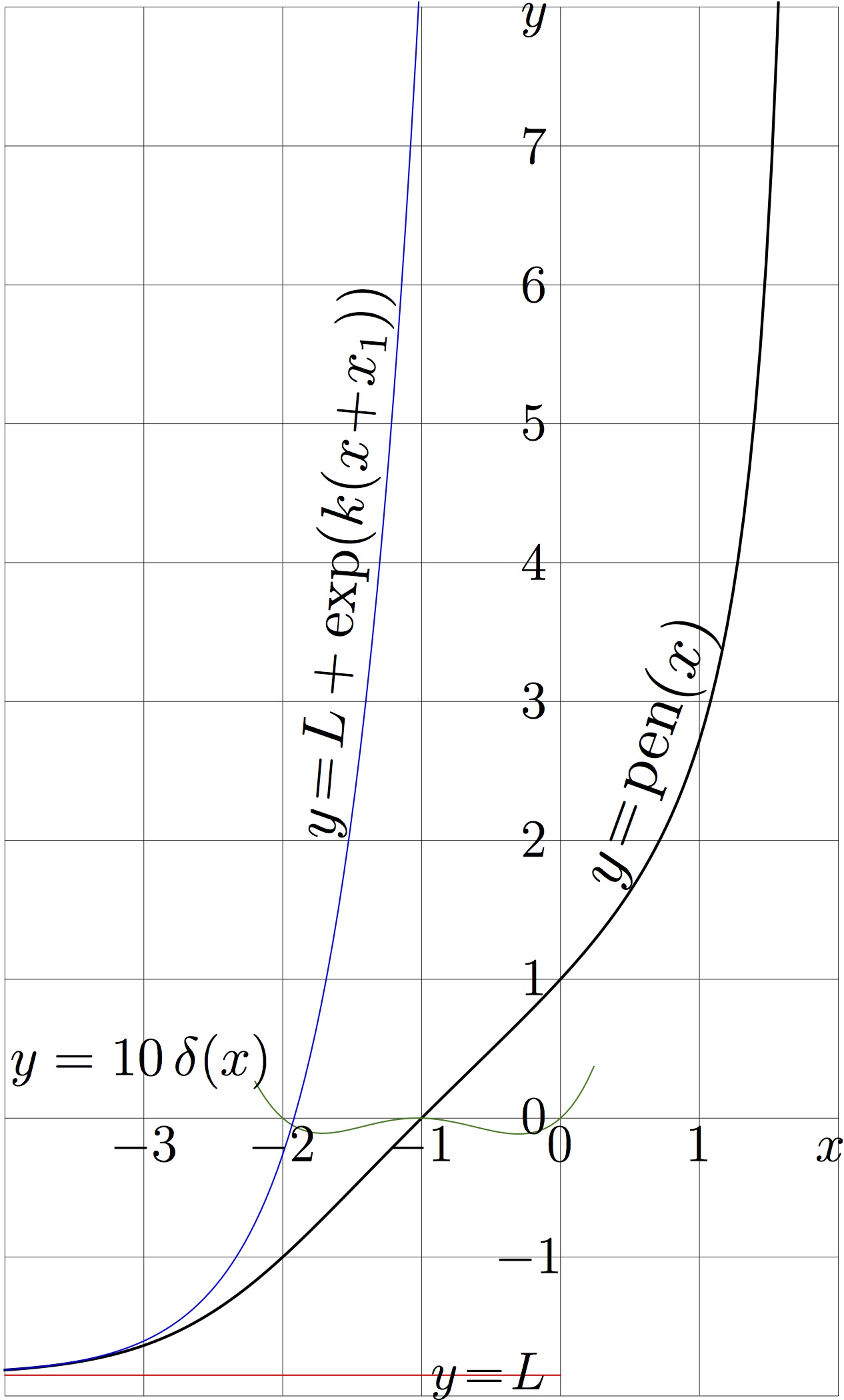 | 1,266 × 2,100 (240 KB) | Maintenance script (talk | contribs) | Importing image file |
You cannot overwrite this file.
File usage
The following 2 pages use this file:
