File:Vladi02.jpg


Original file (2,902 × 2,027 pixels, file size: 680 KB, MIME type: image/jpeg)
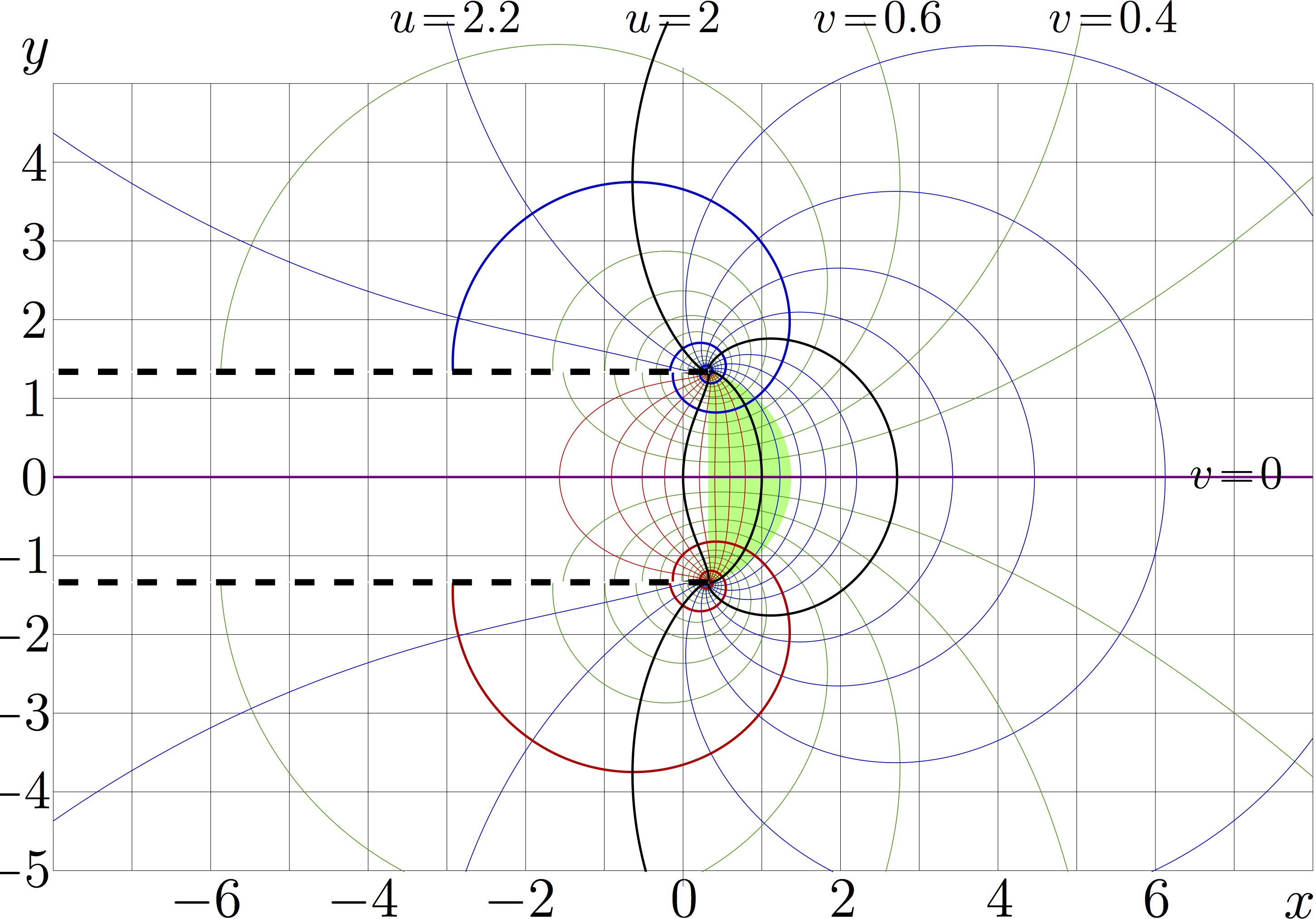
Fig.15.1 from page 204 of book «Superfunctions»[1], 2020.
The same image appears also as Рис.15.1 at page 205 of the Russian version «Суперфункции»[2], 2014.
Similar picture had been published in the Vladikavkaz Matehmatical Journal [3], 2010.
There, this complex map appears as the bottom part of Fig.2.
The figure shows the Complex map of natural arctetration ate;
\[u\!+\!\mathrm i v=\mathrm{ate}(x\!+\!\mathrm i y)\]
Natural arctetration is inverse function of the Natural tetration, that is tetration to base \(\mathrm e = \exp(1) \approx 2.71 \) ;
\[\mathrm{tet}(\mathrm{ate}(z))=z \]
Arctetration satisfies the Abel equation \[ \mathrm{ate} \big( \exp(z)\big) = \mathrm{ate}(z) + 1 \]
Together the tetration and actetrtion allow the evaluation of non-integer iterates of exponential, \[ \exp^n(z)=\mathrm{tet}\big(n+\mathrm{ate}(z)\big) \]
Here, number \(n\) of the iterate has no need to be integer.
In particular, the expression above determines the square root of exponential \(\varphi=\sqrt{\exp}=\exp^{1/2}\); this function satisfies equation \[ \varphi(\varphi(z))=z \]
Iteration half of the exponential, id est \(\varphi\), had been announced in 1950 by Kellmuth Kneser [4].
Then, in years 2009 and 2010, functions tet and ate had been implemented.
C++ generator of map
/* ado.cin, conto.cin, fslog.cin should be loaded in order to compile the code below.*/
#include <math.h>
#include <stdio.h>
#include <stdlib.h>
#define DB double
#define DO(x,y) for(x=0;x<y;x++)
#include <complex>
typedef std::complex<double> z_type;
#define Re(x) x.real()
#define Im(x) x.imag()
#define I z_type(0.,1.)
//#include "superlo.cin"
#include "fslog.cin"
#include "conto.cin"
int main(){ int j,k,m,n; DB x,y, p,q, t; z_type z,c,d, cu,cd;
//z_type Zo=z_type(.31813150520476413, 1.3372357014306895);
//z_type Zc=z_type(.31813150520476413,-1.3372357014306895);

  int M=400,M1=M+1;
  int N=364,N1=N+1;
//DB X[M1],Y[N1], g[M1*N1],f[M1*N1], w[M1*N1]; // w is working array.
DB X[401],Y[365], g[146365],f[146365], w[146365]; // w is working array.
//DB X[401],Y[365], g[160000],f[16000], w[16000]; // w is working array.
//char v[M1*N1]; // v is working array
char v[146365]; // v is working array
FILE *o;o=fopen("vladi02c.eps","w");ado(o,202,122);
fprintf(o,"101 61 translate\n 10 10 scale\n");

z_type L=z_type(.31813150520476413, 1.3372357014306895);
p=Re(L); q=Im(L); DB R=abs(L); DB A=arg(L);
fprintf(o,"0 0 %9.6f %9.6f %9.6f arc C .6 1 .5 RGB F\n",R,-180/M_PI*A,180/M_PI*A);

  DB sx=8./sinh(.01*M);
  DO(m,M1) X[m]=sx*sinh(.02*(m-M/2));
 for(n=0;n<N1;n++){y =-5.  +.03*(n-.5); if(y>-Im(L)) break; Y[n]=y;}
  m=n; y=-Im(L)-.001; Y[m]=y;
  m++; y=-Im(L)+.001; Y[m]=y;
for(n=m+1;n<N1;n++){y =-5. +.03*(n-2-.5); if(y>Im(L)) break; Y[n]=y;}
  m=n; y=Im(L)-.001; Y[m]=y;
  m++; y=Im(L)+.001; Y[m]=y;
for(n=m+1;n<N1;n++){y =-5. +.03*(n-4-.5);  Y[n]=y;}

for(m=-8;m<9;m++) {     if(m==0){M(m,-5.2)L(m,5.2)}
                        else    {M(m,-5)L(m,5)}                 }
for(n=-5;n<6;n++) {M(  -8,n)L(8,n)} fprintf(o,".006 W 0 0 0 RGB S\n");

DO(m,M1)DO(n,N1){       g[m*N1+n]=9999;
                        f[m*N1+n]=9999; }
// z_type F[M1*N1];
DO(m,M1){x=X[m]; printf("50 run at x=%6.3f\n",x);
DO(n,N1){y=Y[n]; z=z_type(x,y);
         c=FSLOG(z);    p=Re(c); q=Im(c);
        if(p>-999 && p<999 && fabs(p)> 1.e-8 && fabs(p-1.)>1.e-8)       g[m*N1+n]=p;
        if(q>-999 && q<999 && fabs(q)> 1.e-8)                           f[m*N1+n]=q;
        }}

p=.4;q=.4;
//#include"plofu.cin"
for(m=-19;m<19;m++)for(n=2;n<10;n+=2)conto(o,f,w,v,X,Y,M,N, (m+.1*n),-q,q);
                                                fprintf(o,".01 W 0 .6 0 RGB S\n");
for(m=0;m<29;m++) for(n=2;n<10;n+=2)conto(o,g,w,v,X,Y,M,N,-(m+.1*n),-q,q);
                                                fprintf(o,".01 W .9 0 0 RGB S\n");
for(m=0;m<29;m++) for(n=2;n<10;n+=2)conto(o,g,w,v,X,Y,M,N, (m+.1*n),-q,q);
                                                fprintf(o,".01 W 0 0 .9 RGB S\n");

for(m= 1;m<20;m++) conto(o,f,w,v,X,Y,M,N, (0.-m),-p,p);fprintf(o,".03 W .8 0 0 RGB S\n");
for(m= 1;m<20;m++) conto(o,f,w,v,X,Y,M,N, (0.+m),-p,p);fprintf(o,".03 W 0 0 .8 RGB S\n");
                conto(o,f,w,v,X,Y,M,N, (0.  ),-p,p); fprintf(o,".03 W .5 0 .5 RGB S\n");
for(m=-31;m<32;m++)conto(o,g,w,v,X,Y,M,N,(0.+m),-p,p);fprintf(o,".03 W 0 0 0 RGB S\n");


M(Re(L), Im(L)) L(-10, Im(L))
M(Re(L),-Im(L)) L(-10,-Im(L)) fprintf(o,".02 W 1 1 1 RGB  S\n");

DO(m,17){ M(Re(L)-.5*m, Im(L))  L(Re(L)-.5*(m+.5), Im(L))}
DO(m,17){ M(Re(L)-.5*m,-Im(L))  L(Re(L)-.5*(m+.5),-Im(L))}
fprintf(o,".08 W 0 0 0 RGB S\n");

// fprintf(o,".1 W 0 0 0 RGB [.12 .14] 1 setdash  S\n");
fprintf(o,"showpage\n%c%cTrailer",'%','%'); fclose(o);
        system("epstopdf vladi02c.eps");
        system(    "open vladi02c.pdf");
//getchar(); system("killall Preview");//macintosh
}
Latex generator of labels
\documentclass[12pt]{article}
\usepackage{graphicx}
\usepackage{rotating}
\usepackage{geometry}
\paperwidth 418px
%\paperheight 134px
\paperheight 292px
\topmargin -104pt
\oddsidemargin -94pt
\pagestyle{empty}
\begin{document}
\newcommand \ing {\includegraphics}
\newcommand \sx {\scalebox}

\newcommand \rot {\begin{rotate}}
\newcommand \ero {\end{rotate}}
\parindent 0pt
\hskip -14pt
\sx{2.5}{\begin{picture}(220,120)
%\put(0,0){\includegraphics{figslogG}}
\put(0,0){\includegraphics{vladi02c}}
\put(17,114){\sx{.6}{$y$}}
\put(17, 99){\sx{.58}{$4$}}
\put(17, 89){\sx{.58}{$3$}}
\put(17, 79){\sx{.58}{$2$}}
\put(17, 69){\sx{.58}{$1$}}
\put(17, 59){\sx{.58}{$0$}}
\put(12, 49){\sx{.58}{$-1$}}
\put(12, 39){\sx{.58}{$-2$}}
\put(12, 29){\sx{.58}{$-3$}}
\put(12, 19){\sx{.58}{$-4$}}
\put(12,  9){\sx{.58}{$-5$}}
\put(178,5){\sx{.6}{$x$}}
%\put(180,4){\sx{.6}{$8$}}
\put(160,5.2){\sx{.6}{$6$}}
\put(140,5.2){\sx{.6}{$4$}}
\put(120,5.2){\sx{.6}{$2$}}
\put( 99.8,5.2){\sx{.6}{$0$}}
\put( 76,5.2){\sx{.6}{$-2$}}
\put( 56,5.2){\sx{.6}{$-4$}}
\put( 36,5.2){\sx{.6}{$-6$}}
%\put(105,57){\sx{1}{$G$}}

\put( 64,118){\sx{.5}{$u\!=\!2.2$}}
\put( 94,118){\sx{.5}{$u\!=\!2$}}
\put(118,118){\sx{.5}{$v\!=\!0.6$}}
\put(148,118){\sx{.5}{$v\!=\!0.4$}}
%\put(182,100){\sx{.5}{$v\!=\!0.2$}}
%\put(182, 92){\sx{.5}{$u\!=\!1.8$}}
\put(166, 59.8){\sx{.5}{$v\!=\!0$}}
\end{picture}}
\end{document}
References
- ↑ https://mizugadro.mydns.jp/BOOK/468.pdf Dmitrii Kouznetsov. Superfunctions. Lambert Academic Publishing, 2020.
- ↑
https://www.researchgate.net/publication/265468462_Superfunkcii_In_Russian
https://mizugadro.mydns.jp/BOOK/202.pdf
https://mybooklist.ru/book/oz154552222
Дмитрий Кузнецов. Суперфункции. Lambert Academic Publishing, 2014. - ↑
https://mizugadro.mydns.jp/PAPERS/2010vladie.pdf
https://mizugadro.mydns.jp/PAPERS/2010vladir.pdf
D.Kouznetsov. Superexponential as special function. Vladikavkaz Mathematical Journal, 2010, v.12, issue 2, p.31-45. Figure 2. - ↑ http://www.digizeitschriften.de/dms/img/?PID=GDZPPN002175851&physid=phys63#navi Hellmuth Kneser. Reelle analytische Lösungen der Gleichung \( \varphi(\varphi(x))=\mathrm e^x \) und verwandter Funktionalgleichungen. Journal für die reine und angewandte Mathematik / Zeitschriftenband (1950) / Artikel / 56 - 67
Keywords
«Аbel function», «Abelfunction», «Arctetration», «Exp», «Exponential», «Hellmuth Kneser», «Latex», «Natural tetration», «Superfunctions», «Tetration»,
File history
Click on a date/time to view the file as it appeared at that time.
| Date/Time | Thumbnail | Dimensions | User | Comment | |
|---|---|---|---|---|---|
| current | 06:14, 1 December 2018 | | 2,902 × 2,027 (680 KB) | Maintenance script (talk | contribs) | Importing image file |
You cannot overwrite this file.
File usage
There are no pages that use this file.
